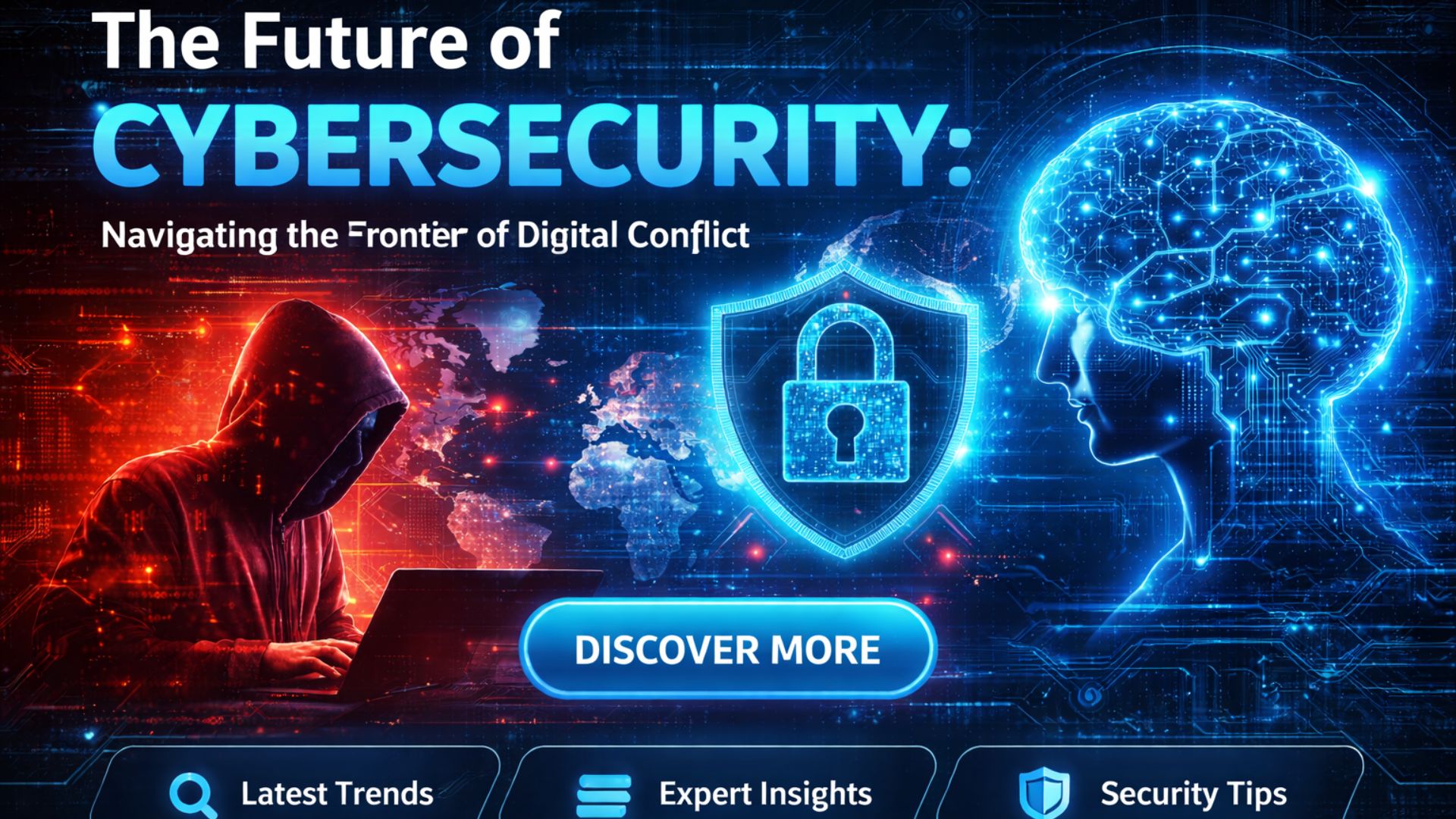
We stand at a pivotal moment in human technological evolution. Our world is more interconnected than ever before—smart cities pulse with data, artificial intelligence makes trillion-dollar decisions, quantum computers loom on the horizon promising unimaginable computational power, and billions of Internet of Things (IoT) devices weave a digital fabric that envelops our physical reality. This hyper-connected existence brings unprecedented convenience and capability, but it also creates what security experts call "the greatest attack surface in human history." The future of cybersecurity isn't just about protecting data; it's about safeguarding the very infrastructure of modern civilization.
Cybersecurity has undergone a dramatic transformation. What began as simple virus protection in the 1980s evolved into network security in the 1990s, expanded to data-centric security in the 2000s, and has now become what industry leaders term "cyber-physical security" in the 2020s. The stakes have escalated from individual inconvenience to potential national catastrophes. A successful attack on a power grid could plunge cities into darkness for weeks. Compromised medical devices could directly threaten human lives. Manipulated financial algorithms could trigger global economic collapse.
This comprehensive exploration examines the multifaceted future of cybersecurity across five critical dimensions: technological evolution, threat landscape transformation, defensive paradigm shifts, workforce and education revolution, and geopolitical implications. We'll explore not just what's coming, but how organizations and individuals can prepare today for the challenges of tomorrow.
Part 1: Technological Forces Reshaping the Battlefield
The Quantum Revolution: Breaking and Making Cryptography
Quantum computing represents perhaps the most profound technological shift affecting cybersecurity. While practical, large-scale quantum computers are still years away, their eventual arrival threatens to render obsolete the public-key cryptography that secures nearly all digital communications today—from online banking and e-commerce to encrypted messaging and secure government communications.
The Threat Timeline: Current estimates suggest that cryptographically-relevant quantum computers (CRQCs) capable of breaking RSA-2048 or elliptic-curve cryptography could emerge within 10-15 years. However, the "harvest now, decrypt later" threat is already present. Adversaries are collecting encrypted data today, anticipating they'll be able to decrypt it once quantum computers become available. Sensitive information with long-term value—state secrets, intellectual property, medical records, and personal identification data—is particularly vulnerable.
The Solution Landscape: The field of Post-Quantum Cryptography (PQC) has emerged to address this threat. In 2022, the National Institute of Standards and Technology (NIST) selected the first four quantum-resistant cryptographic algorithms as part of a multi-year standardization process. The migration to these new standards will be one of the largest and most complex technological transitions in history, affecting everything from web browsers and operating systems to IoT devices and critical infrastructure.
Critical Resource: NIST Post-Quantum Cryptography Standardization Project – The definitive source for PQC standards and migration guidelines.
Implementation Challenge: The transition won't be simple. Quantum-resistant algorithms typically require more computational power and larger key sizes than current standards. They need to be integrated into existing protocols like TLS, SSH, and IPsec. Organizations must begin inventorying their cryptographic assets, assessing their quantum vulnerability, and developing migration roadmaps now to avoid a last-minute scramble.
Artificial Intelligence: The Double-Edged Sword
AI and machine learning are transforming cybersecurity from both defensive and offensive perspectives, creating what experts describe as an "AI arms race" in cyberspace.
Defensive AI Applications:
-
Behavioral Analytics: Machine learning models establishing behavioral baselines for users, devices, and networks to detect anomalies that indicate compromise
-
Predictive Threat Intelligence: AI systems correlating millions of data points to predict attack vectors before they're exploited
-
Automated Response: Security orchestration, automation, and response (SOAR) platforms executing complex playbooks in milliseconds
-
Vulnerability Management: Prioritizing patching based on exploit likelihood and business impact predictions
Offensive AI Developments:
-
Adaptive Malware: Malware that learns from its environment to evade detection and maximize damage
-
AI-Powered Social Engineering: Deepfake audio and video enabling highly convincing phishing attacks
-
Automated Vulnerability Discovery: AI systems scanning code and networks for weaknesses more efficiently than human hackers
-
Adversarial Machine Learning: Attacks specifically designed to fool AI-based security systems
The Human-AI Partnership: Contrary to dystopian predictions, AI won't replace cybersecurity professionals but will dramatically augment their capabilities. Human expertise will shift toward strategy, oversight, and handling the edge cases that confuse AI systems. The most effective security operations centers of the future will feature seamless collaboration between human analysts and AI assistants.
Research Reference: MITRE ATLAS (Adversarial Threat Landscape for Artificial-Intelligence Systems) – A knowledge base of AI attack tactics and techniques.
The Expanding Universe of Connected Things
The Internet of Things is exploding in scale and scope. From smart home devices and wearables to industrial control systems and autonomous vehicles, IoT represents both tremendous opportunity and unprecedented risk.
Scale of the Challenge: Conservative estimates project 75 billion connected devices by 2025. Many of these devices have minimal security features, long lifespans, and limited update capabilities. They often serve as entry points for attacks on more valuable systems, as demonstrated by the Mirai botnet that turned consumer IoT devices into a weapon capable of disrupting major internet infrastructure.
Emerging Standards and Regulations: Governments worldwide are implementing IoT security regulations. The UK's Product Security and Telecommunications Infrastructure Act, the EU's Cyber Resilience Act, and California's IoT security law establish baseline requirements for IoT manufacturers. These include unique device identifiers, vulnerability disclosure programs, and secure update mechanisms.
Technical Innovations:
-
Hardware Roots of Trust: Secure cryptographic elements embedded in hardware
-
Device Identity Management: Scalable solutions for authenticating billions of devices
-
Lightweight Cryptography: Efficient cryptographic protocols for resource-constrained devices
-
Network Segmentation: Microsegmentation isolating IoT devices from critical networks
Guidance Resource: IoT Security Foundation Compliance Framework – Best practices for securing IoT throughout its lifecycle.
Blockchain and Decentralized Security Paradigms
While cryptocurrency volatility dominates headlines, the underlying blockchain technology offers intriguing possibilities for cybersecurity applications:
Immutable Audit Trails: Creating tamper-evident logs for security events and compliance requirements
Decentralized Identity: Giving users control over their digital identities without centralized authorities
Secure Software Supply Chains: Verifying the provenance and integrity of software components
Distributed Threat Intelligence: Sharing attack indicators without a central clearinghouse
However, blockchain introduces its own security considerations, including smart contract vulnerabilities, consensus mechanism attacks, and key management challenges that represent novel attack surfaces.
Part 2: The Evolving Threat Landscape
From Cybercrime to Cyber Conflict
The boundary between criminal activity and nation-state operations continues to blur. Criminal groups increasingly employ nation-state level tradecraft, while state actors sometimes use criminal proxies for plausible deniability. We're witnessing the professionalization and industrialization of cyber threats.
Ransomware Evolution: Modern ransomware operations have evolved into sophisticated Ransomware-as-a-Service (RaaS) ecosystems with specialized roles—access brokers, malware developers, negotiators, and money launderers. The emergence of double and triple extortion (encrypting data, threatening to leak it, and then attacking the victim's customers or partners) has increased pressure on victims to pay.
Supply Chain Attacks: The SolarWinds attack of 2020 marked a watershed moment, demonstrating how compromising a single software provider could grant access to thousands of organizations. This attack vector will continue to grow as software supply chains become more complex and interconnected.
Critical Reading: Microsoft Digital Defense Report 2023 – Comprehensive analysis of the current threat landscape.
The Physical-Digital Convergence
As operational technology (OT) and information technology (IT) networks converge, previously isolated industrial control systems become accessible from the internet. This creates terrifying possibilities:
Critical Infrastructure at Risk: Energy grids, water treatment facilities, transportation systems, and healthcare infrastructure are increasingly digitized and interconnected. Successful attacks could have physical consequences, including environmental damage, service disruption, and loss of life.
The Healthcare Dilemma: Medical devices—from insulin pumps to MRI machines—represent life-critical systems with cybersecurity often treated as an afterthought. The FDA now requires cybersecurity documentation for medical device approvals, but the installed base remains vulnerable.
Automotive and Transportation Security: Modern vehicles contain over 100 million lines of code and dozens of connected computers. Autonomous vehicles will be particularly attractive targets for everything from ransomware to terrorism.
Framework Resource: CISA Industrial Control Systems Advisory – Regular updates on ICS vulnerabilities and threats.
The Human Factor: Psychology Meets Technology
Despite technological advances, human psychology remains the most exploited vulnerability. Social engineering attacks are becoming increasingly sophisticated:
AI-Enhanced Phishing: Natural language generation creates highly personalized phishing emails that bypass traditional filters
Deepfake Audio and Video: Convincing simulations of executives authorizing fraudulent transactions
Cognitive Hacking: Exploiting cognitive biases through carefully crafted misinformation
The defense against these attacks requires equal parts technology and education—combining AI-powered detection with comprehensive security awareness training that goes beyond annual compliance exercises.
Part 3: Defensive Paradigm Shifts
Zero Trust: The New Security Architecture
The traditional perimeter-based security model—treating everything inside the network as trustworthy—has collapsed in the era of cloud computing, remote work, and sophisticated attackers who routinely bypass perimeter defenses.
Core Principles of Zero Trust:
-
Never Trust, Always Verify: Treat all users, devices, and network traffic as potentially hostile
-
Least Privilege Access: Grant only the minimum permissions needed for specific tasks
-
Assume Breach: Operate with the assumption that attackers are already inside the network
-
Microsegmentation: Divide networks into small zones with separate security controls
-
Continuous Authentication: Verify identities throughout sessions, not just at initial login
Implementation Framework: Zero Trust Architecture (NIST SP 800-207) – The definitive guide to Zero Trust implementation.
Challenges in Adoption: While the principles are clear, implementation is complex. Zero Trust requires identity-aware networking, comprehensive asset inventory, and policy enforcement points throughout the infrastructure. Many organizations are taking a phased approach, starting with privileged access management and network segmentation before expanding to full Zero Trust architecture.
DevSecOps and Shift-Left Security
The traditional approach of adding security at the end of the development cycle is untenable in an era of continuous integration and deployment. DevSecOps—integrating security throughout the software development lifecycle—is becoming essential.
Key Practices:
-
Security as Code: Defining security policies in code that can be version-controlled and tested
-
Automated Security Testing: Integrating static and dynamic analysis tools into CI/CD pipelines
-
Compliance as Code: Automating regulatory compliance checks
-
Infrastructure as Code Security: Scanning cloud infrastructure templates for misconfigurations
Tooling Ecosystem: The DevSecOps toolchain includes Software Composition Analysis (SCA) for open-source components, Static Application Security Testing (SAST), Dynamic Application Security Testing (DAST), and Interactive Application Security Testing (IAST). The challenge lies in integrating these tools without slowing development velocity.
Resource Hub: OWASP DevSecOps Maturity Model – Guidance for implementing security in DevOps environments.
Privacy-Enhancing Technologies (PETs)
As data privacy regulations proliferate and consumer awareness grows, technologies that enable data utility while protecting privacy are gaining traction:
Homomorphic Encryption: Allows computation on encrypted data without decryption, enabling secure outsourcing of data processing
Differential Privacy: Adds carefully calibrated noise to datasets to prevent identification of individuals while preserving statistical utility
Federated Learning: Trains machine learning models across decentralized devices without sharing raw data
Secure Multi-Party Computation: Enables joint computation on private inputs from multiple parties
These technologies will become increasingly important as organizations seek to leverage data for insights while maintaining compliance with regulations like GDPR and CCPA.
Part 4: Workforce and Education Revolution
Addressing the Cybersecurity Talent Gap
The global cybersecurity workforce gap stands at approximately 3.5 million professionals, and this shortage affects organizations of all sizes and sectors. Addressing this gap requires rethinking how we identify, train, and retain cybersecurity talent.
Democratizing Entry: Traditional cybersecurity hiring has over-emphasized four-year degrees and specific certifications, potentially excluding talented individuals from non-traditional backgrounds. Organizations are increasingly considering skills-based hiring, apprenticeship programs, and alternative pathways into the field.
Upskilling Existing Staff: With technology evolving rapidly, continuous learning is essential. Organizations are investing in upskilling programs that help IT professionals transition into security roles and keep current staff updated on emerging threats and technologies.
Automation and Augmentation: While AI won't replace cybersecurity professionals, it will change their roles. Routine tasks like log analysis, basic triage, and patch management will increasingly be automated, allowing human experts to focus on higher-level analysis, strategy, and response to sophisticated attacks.
Workforce Development: ISC2 Cybersecurity Workforce Study – Annual analysis of workforce trends and gaps.
Cybersecurity Education Transformation
Educational approaches must evolve to keep pace with the changing threat landscape:
Hands-On, Scenario-Based Learning: Cybersecurity is ultimately a practical discipline. Effective training increasingly uses realistic simulations, capture-the-flag competitions, and cyber ranges that provide hands-on experience in safe environments.
Interdisciplinary Approaches: Modern cybersecurity intersects with law, psychology, business, and ethics. Educational programs are incorporating these perspectives to produce well-rounded professionals who understand the broader context of their work.
Continuous Certification: The half-life of cybersecurity knowledge is shrinking. Certification bodies are moving toward continuous assessment models rather than one-time exams, ensuring professionals maintain current knowledge throughout their careers.
Educational Resource: National Initiative for Cybersecurity Education (NICE) Framework – A reference for cybersecurity education and workforce development.
Part 5: Geopolitical and Regulatory Landscape
The New Digital Sovereignty
Nations are increasingly asserting control over their digital ecosystems through data localization laws, content regulations, and technology standards:
Fragmentation of the Internet: The vision of a single, global internet is giving way to a more fragmented landscape with different rules, standards, and technologies in different regions. This "splinternet" has significant implications for cybersecurity, complicating threat intelligence sharing and coordinated responses.
Technology Standards as Strategic Tools: Standards for 5G, IoT, and artificial intelligence are becoming geopolitical battlegrounds. Nations recognize that controlling technical standards provides economic advantage and security assurances.
Supply Chain National Security: The concentration of semiconductor manufacturing in specific regions, particularly Taiwan, represents a strategic vulnerability. Nations are investing billions to diversify their technology supply chains.
Evolving Regulatory Framework
The regulatory landscape is becoming more complex and consequential:
Sector-Specific Regulations: Beyond general data protection laws, sectors like finance (NYDFS Cybersecurity Regulation), healthcare (HIPAA Security Rule), and energy (NERC CIP) face specific cybersecurity requirements with significant penalties for non-compliance.
Cyber Incident Reporting: Laws like the U.S. Cyber Incident Reporting for Critical Infrastructure Act of 2022 and the EU's NIS2 Directive mandate reporting of significant cyber incidents within tight timeframes, typically 24-72 hours.
Software Liability Shifts: Traditionally, software vendors have faced limited liability for security flaws. Regulatory proposals on both sides of the Atlantic are exploring shifting more responsibility to software producers, particularly for critical infrastructure.
Regulatory Tracker: International Association of Privacy Professionals (IAPP) Resource Center – Tracks global privacy and security regulations.
Preparing for the Future: A Strategic Roadmap
Immediate Actions (Next 12 Months)
-
Conduct a Cryptography Inventory: Identify where and how encryption is used in your organization, prioritizing systems that will need quantum-resistant algorithms.
-
Begin Zero Trust Implementation: Start with privileged access management and network segmentation for critical assets.
-
Enhance Supply Chain Security: Implement software bill of materials (SBOM) requirements for vendors and conduct third-party risk assessments.
-
Develop AI Governance: Create policies for the secure development, procurement, and use of AI systems.
-
Conduct Tabletop Exercises: Test incident response plans against realistic scenarios including ransomware, supply chain attacks, and AI-enhanced threats.
Medium-Term Initiatives (1-3 Years)
-
Quantum Migration Planning: Develop a detailed roadmap for transitioning to post-quantum cryptography based on NIST standards.
-
OT/IT Convergence Security: Implement dedicated security monitoring and segmentation for operational technology environments.
-
Privacy-Enhancing Technology Pilots: Experiment with homomorphic encryption, differential privacy, or federated learning for high-sensitivity data use cases.
-
Workforce Development Program: Establish apprenticeship, upskilling, and alternative pathway programs to address talent gaps.
-
Cyber Insurance Strategy: Work with insurers to understand evolving requirements and ensure coverage aligns with risk posture.
Long-Term Vision (3-5+ Years)
-
Autonomous Security Operations: Implement AI-powered security orchestration with appropriate human oversight.
-
Quantum-Safe Infrastructure: Complete migration to quantum-resistant cryptography across all systems.
-
Resilience by Design: Architect systems with inherent resilience, assuming some attacks will succeed.
-
Integrated Cyber-Physical Security: Develop unified security approaches spanning digital and physical domains.
-
Ethical AI Security Framework: Establish governance for the ethical use of AI in cybersecurity, particularly regarding automated response and privacy implications.
Frequently Asked Questions
Q1: How urgent is the quantum computing threat to current encryption?
A: The threat is more imminent than many organizations realize. While cryptographically-relevant quantum computers are likely 10-15 years away, the "harvest now, decrypt later" attack strategy means that data encrypted today with vulnerable algorithms could be decrypted in the future. Sensitive information with long-term value—intellectual property, state secrets, personally identifiable information, and medical records—is already at risk. Organizations should begin their quantum readiness journey now with a cryptography inventory and migration planning.
Q2: Will AI eventually make human cybersecurity professionals obsolete?
A: No, but it will dramatically transform their roles. AI excels at processing vast amounts of data, identifying patterns, and automating routine tasks. However, cybersecurity requires contextual understanding, ethical judgment, strategic thinking, and creativity in response to novel attack techniques—areas where humans excel. The future will involve human-AI collaboration, with AI handling detection and initial response while humans focus on strategy, complex analysis, and oversight. The demand for skilled cybersecurity professionals is actually increasing as organizations recognize the need for experts who can work effectively with AI systems.
Q3: What's the single most important security investment organizations should make today?
A: While there's no single silver bullet, most experts agree that implementing multi-factor authentication (MFA) across all systems provides the best security return on investment. MFA prevents approximately 99.9% of account compromise attacks. Beyond MFA, organizations should prioritize:
-
Regular, automated backups tested for restoration
-
Comprehensive security awareness training
-
Timely patch management
-
An incident response plan that's regularly tested
These fundamentals address the majority of successful attacks organizations face today.
Q4: How can small and medium-sized businesses with limited resources compete against sophisticated threats?
A: SMBs can adopt several cost-effective strategies:
-
Leverage managed security services: MSSPs provide enterprise-grade security at a fraction of the cost of building an in-house team
-
Focus on security fundamentals: Implement MFA, regular backups, employee training, and prompt patching—these address most common attack vectors
-
Use cloud-based security: Many cloud providers include robust security features in their base offerings
-
Participate in information sharing groups: Organizations like ISACs (Information Sharing and Analysis Centers) provide threat intelligence tailored to specific sectors
-
Prioritize based on risk: Conduct a risk assessment focusing on your most valuable assets and likely threats rather than trying to protect everything equally
Q5: Is complete cybersecurity even possible, or should we focus on resilience?
A: Perfect security is unattainable in practice. Sophisticated attackers with sufficient resources will eventually breach even well-defended systems. Therefore, the strategic focus is shifting from prevention-only to resilience—the ability to withstand, respond to, and recover from attacks while maintaining critical operations. This involves:
-
Designing systems with redundancy and failover capabilities
-
Developing comprehensive incident response and business continuity plans
-
Regularly testing recovery procedures through exercises and simulations
-
Building organizational awareness and preparedness at all levels
-
Establishing clear communication protocols for during and after incidents
Resilience acknowledges that some attacks will succeed and focuses on minimizing their impact.
Q6: How will cybersecurity evolve for home users and individuals in the future?
A: Individual cybersecurity will become both more automated and more complex:
-
Integrated home security hubs: Future smart home systems will include built-in network security monitoring and protection
-
Biometric and behavioral authentication: Passwords will be supplemented or replaced by fingerprint, facial recognition, and behavioral biometrics
-
AI-powered personal security assistants: Automated systems will monitor digital footprints, alert to potential identity theft, and provide personalized security recommendations
-
Increased personal responsibility: As more devices connect to home networks, users will need basic security awareness to configure devices securely
-
Digital inheritance planning: With extensive digital assets and identities, individuals will need to plan for secure transfer or deletion of digital property
Despite increased automation, digital literacy will remain essential as social engineering attacks grow more sophisticated.
Conclusion: Embracing the Cybersecurity Journey
The future of cybersecurity is neither dystopian nor utopian—it is complex, challenging, and filled with both peril and promise. We are moving from an era of perimeter defense to one of ubiquitous computing, from human-scale threats to AI-powered attacks, from data protection to safeguarding cyber-physical systems that directly impact human wellbeing.
Organizations that will thrive in this future are those that embrace cybersecurity not as a technical afterthought but as a strategic imperative woven into their culture, operations, and innovation processes. They recognize that security is a journey rather than a destination—a continuous process of assessment, adaptation, and improvement.
The most successful approaches will balance technological solutions with human factors, combine prevention with resilience, and integrate security considerations from the initial design phase through the entire lifecycle of systems and data. They will foster collaboration across organizational boundaries, recognizing that in cybersecurity, we are only as strong as our collective defense.
As we stand at this technological crossroads, one truth remains constant: cybersecurity is fundamentally about enabling trust in our digital world. By building systems that are secure, resilient, and respectful of privacy, we can realize the tremendous potential of our connected future while mitigating its risks. The challenge is immense, but so is the opportunity to shape a digital ecosystem that is not only innovative and convenient but also safe, trustworthy, and fundamentally human-centered.