As we approach 2030, Artificial Intelligence is poised to reshape the global workforce in profound and complex ways. What began as automation of routine tasks has evolved into systems capable of creative work, complex analysis, and nuanced decision-making. This transformation presents not just disruption, but remarkable opportunities for individuals, businesses, and economies willing to adapt.
To understand this workforce shift in context, it is important to first examine the broader trajectory of AI adoption. Our detailed analysis on the future of Artificial Intelligence in India explores how national strategies, startups, and public infrastructure are laying the foundation for this transformation.
According to a McKinsey Global Institute report, by 2030 up to 30% of current work hours could be automated, largely accelerated by generative AI. At the same time, new job categories will emerge that require close human–AI collaboration.
The Historical Context: Lessons from Past Revolutions
Every major technological revolution has reshaped work. The Industrial Revolution eliminated many manual trades but created factories, engineering roles, and entirely new industries. Similarly, the computer revolution of the late 20th century created jobs that did not previously exist.
As highlighted by the World Economic Forum, while millions of roles may be displaced by AI, an even greater number of new roles are expected to emerge across technology, healthcare, education, and services.
Why the AI Transformation Is Different
Speed and Scale
Unlike earlier technological shifts that unfolded over decades, AI adoption is happening at unprecedented speed. Generative AI tools reached hundreds of millions of users within months, fundamentally changing how knowledge work is performed.
Cognitive Automation
Research from OpenAI and the University of Pennsylvania suggests that nearly 80% of workers could see at least some of their tasks affected by large language models.
Sector-by-Sector Workforce Transformation
Healthcare
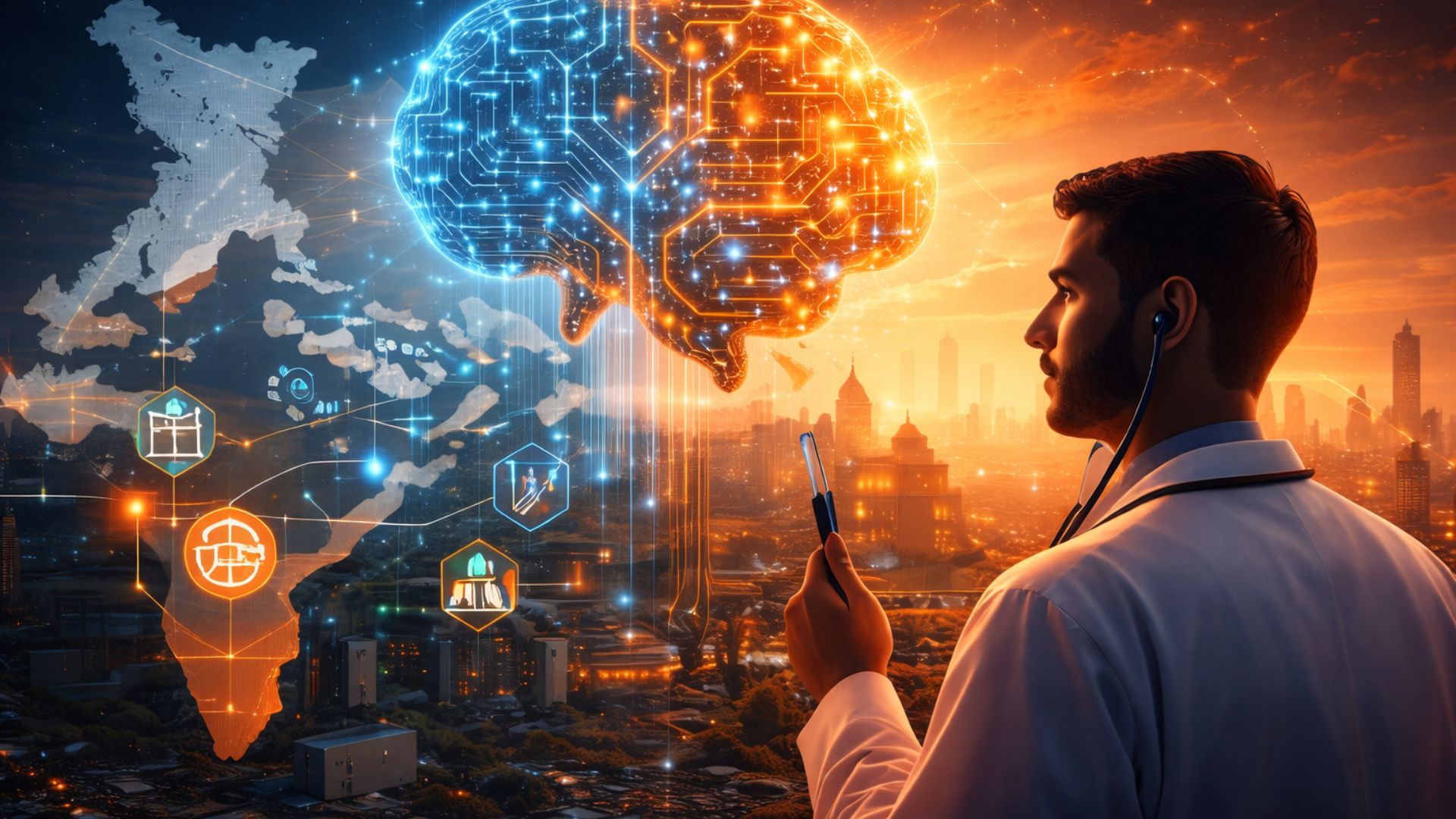
AI will increasingly augment healthcare professionals rather than replace them. Administrative documentation and routine diagnostics will be automated, allowing doctors and nurses to focus on patient care and treatment planning.
The American Medical Association emphasizes that AI’s role is to support clinical decision-making, not eliminate medical expertise.
Manufacturing
Manufacturing will continue its transition toward smart factories powered by AI-driven robotics, predictive maintenance, and digital twins. Human workers will shift toward system supervision, optimization, and innovation roles.
According to Deloitte, AI could add trillions of dollars to global manufacturing output while requiring significant reskilling.
Creative Industries
Rather than replacing creativity, AI is becoming a collaborative tool. Designers, writers, and filmmakers increasingly use AI to accelerate ideation, production, and experimentation.
Regulatory frameworks such as the EU AI Act recognize the importance of protecting human creativity while enabling innovation.
Knowledge and Professional Work
Legal research, accounting, consulting, and management roles are being reshaped. AI handles repetitive analysis while humans focus on judgment, strategy, and relationship-building.
A Goldman Sachs analysis estimates that generative AI could significantly boost global productivity while transforming professional roles.
New Job Categories in an AI-Augmented World
- AI Trainers and Ethics Specialists – ensuring responsible system behavior
- Prompt Engineers – optimizing human–AI interaction
- AI Integration Consultants – embedding AI into business workflows
- Digital Twin Architects – managing virtual replicas of physical systems
Skills That Will Define Career Success
Technical Literacy
AI literacy will become as essential as basic computer skills. Platforms such as Google AI Essentials help professionals build foundational understanding.
Human-Centered Skills
- Complex problem-solving
- Creativity and innovation
- Emotional intelligence
- Ethical judgment
- Adaptability and continuous learning
How Organizations Must Adapt
Companies must redesign roles around human–AI collaboration rather than replacement. Investment in continuous learning and ethical AI frameworks will be key to long-term success.
Programs like Amazon’s upskilling initiative demonstrate how enterprises can future-proof their workforce.
Policy and Societal Implications
Governments and institutions must modernize education systems, strengthen social safety nets, and invest in digital infrastructure to ensure inclusive AI-driven growth.
Organizations such as the OECD and MIT’s Work of the Future initiative emphasize that AI’s impact depends on the choices societies make today.
Conclusion
AI will not eliminate work—it will redefine it. The future belongs to individuals and organizations that proactively adapt, invest in learning, and strengthen uniquely human capabilities.
When viewed alongside broader AI adoption trends—such as those discussed in our article on the future of Artificial Intelligence in India—it becomes clear that workforce transformation is not a distant possibility but an ongoing reality.