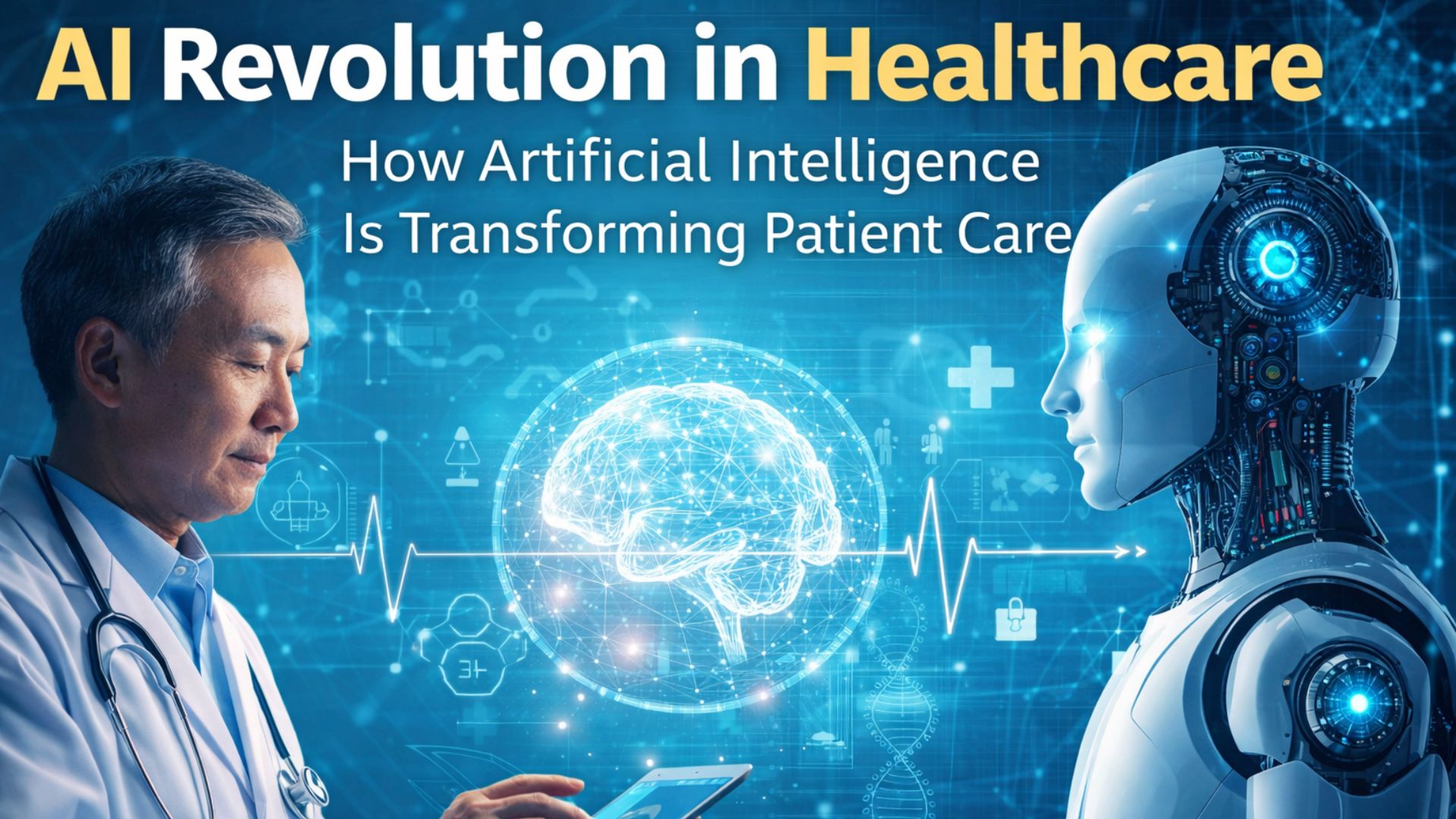
Artificial Intelligence (AI) is reshaping healthcare at a pace never seen before. From improving diagnostic accuracy and personalizing treatments to reducing doctor burnout and accelerating drug discovery, AI is fundamentally changing how healthcare systems operate. What once depended entirely on human expertise and manual analysis can now be enhanced through intelligent algorithms capable of processing massive volumes of medical data in seconds.
Healthcare organizations worldwide are adopting AI not to replace doctors, but to empower them. AI systems assist clinicians in making faster, more accurate decisions while freeing them from time-consuming administrative tasks. This shift is helping healthcare systems address critical challenges such as rising costs, workforce shortages, and increasing patient demand.
According to industry estimates, the global AI in healthcare market was valued at approximately $11 billion in 2021 and is projected to grow to nearly $187 billion by 2030. This explosive growth highlights the growing trust in AI-driven healthcare solutions.
AI is also transforming the healthcare workforce. To understand how AI is reshaping jobs across industries, including healthcare roles, read our related article: How AI Will Change Jobs By 2030.
Table of Contents
- Understanding Artificial Intelligence in Healthcare
- Core AI Technologies Used in Medicine
- AI in Diagnosis and Medical Imaging
- AI in Treatment Planning and Personalized Medicine
- Administrative Automation in Healthcare
- Robotics and AI-Assisted Surgery
- AI in Drug Discovery and Clinical Research
- Remote Monitoring and Digital Health
- Benefits of AI for Patients and Doctors
- Ethical, Privacy, and Security Challenges
- Regulations Governing AI in Healthcare
- Future of AI in Healthcare
- Frequently Asked Questions
- Conclusion
Understanding Artificial Intelligence in Healthcare
Artificial Intelligence in healthcare refers to computer systems designed to perform tasks that typically require human intelligence. These tasks include learning from data, recognizing patterns, interpreting medical images, understanding natural language, and making predictions.
Healthcare generates enormous amounts of data every day—electronic health records, lab reports, medical imaging, genomic data, and data from wearable devices. AI systems can analyze this information at scale, uncovering insights that would be impossible for humans to detect alone.
Authoritative sources:
Core AI Technologies Used in Medicine
Machine Learning (ML)
Machine Learning enables AI systems to learn from historical medical data without being explicitly programmed. ML models are used to predict disease risk, identify high-risk patients, and optimize treatment outcomes.
Natural Language Processing (NLP)
NLP allows AI to understand and interpret human language. In healthcare, it is used to analyze clinical notes, automate medical documentation, and improve communication between healthcare providers.
Reference: NCBI – NLP in Healthcare
Deep Learning
Deep learning models analyze complex datasets such as X-rays, MRIs, CT scans, and pathology slides. These systems can detect subtle abnormalities that may be missed by the human eye.
AI in Diagnosis and Medical Imaging
AI-powered diagnostic tools are transforming medical imaging. These systems assist radiologists by rapidly analyzing scans and highlighting areas of concern.
- Breast cancer detection from mammograms
- Lung cancer screening using CT scans
- Diabetic retinopathy detection
- Stroke identification in emergency imaging
AI improves accuracy while reducing diagnostic delays. Reference: Nature – AI in Medical Imaging.
AI in Treatment Planning and Personalized Medicine
Personalized medicine is one of AI’s most powerful contributions to healthcare. By analyzing genetic data, lifestyle factors, and medical history, AI helps doctors tailor treatments to individual patients.
This approach improves effectiveness and minimizes side effects. It also mirrors broader workforce trends where AI enhances human decision-making rather than replacing it, as discussed in How AI Will Change Jobs By 2030.
Reference: NIH – Precision Medicine Initiative
Administrative Automation in Healthcare
Doctors often spend more time on paperwork than with patients. AI-driven administrative tools address this issue by automating documentation, scheduling, billing, and hospital resource management.
These efficiencies significantly reduce clinician burnout and improve patient satisfaction. Similar automation trends are also transforming administrative jobs across industries.
Reference: HealthIT.gov – AI in Healthcare
Robotics and AI-Assisted Surgery
AI-assisted robotic surgery enhances precision, stability, and control during complex procedures. Surgeons benefit from improved visualization and reduced fatigue.
- Smaller incisions
- Lower risk of complications
- Faster patient recovery
- Improved surgical accuracy
AI in Drug Discovery and Clinical Research
Drug development traditionally takes over a decade and billions of dollars. AI dramatically accelerates this process by predicting how compounds will behave in the human body.
AI is used in:
- Molecule screening
- Clinical trial optimization
- Side-effect prediction
- Outcome forecasting
Reference: Nature Reviews – AI Drug Discovery
Remote Monitoring and Digital Health
AI-powered wearables and remote monitoring systems allow continuous tracking of patient health. These tools help detect issues early, reduce hospital admissions, and support chronic disease management.
Benefits of AI for Patients and Doctors
- Earlier disease detection
- Higher diagnostic accuracy
- Personalized treatments
- Lower healthcare costs
- Reduced clinician burnout
- Improved patient outcomes
Ethical, Privacy, and Security Challenges
Despite its benefits, AI introduces challenges related to data privacy, algorithmic bias, and transparency. Healthcare organizations must ensure AI systems are ethical, secure, and inclusive.
Reference: HHS – HIPAA
Regulations Governing AI in Healthcare
Regulatory bodies such as the FDA oversee AI-based medical devices to ensure safety and effectiveness.
Reference: FDA – AI in Medical Devices
Future of AI in Healthcare
The future of healthcare will be predictive, preventive, and personalized. AI systems will help identify risks before symptoms appear and support proactive treatment strategies.
As AI reshapes healthcare, it will also transform jobs and skills across industries. Learn more in our detailed guide: How AI Will Change Jobs By 2030.
Frequently Asked Questions (FAQs)
1. What is AI in healthcare?
AI in healthcare refers to intelligent systems that assist in diagnosis, treatment, administration, and medical research.
2. Can AI replace doctors?
No. AI supports doctors but cannot replace human judgment, empathy, and ethical decision-making.
3. Is AI diagnosis reliable?
AI is highly accurate for specific tasks and works best when combined with clinical expertise.
4. How does AI impact healthcare jobs?
AI changes job roles by automating routine tasks and creating new opportunities in health analytics and AI management.
5. Is patient data safe with AI?
Data safety depends on regulatory compliance and secure system implementation.
6. What are the risks of AI in healthcare?
Risks include data breaches, bias, lack of transparency, and over-reliance on automation.
7. How does AI reduce doctor burnout?
AI automates documentation and administrative tasks, allowing doctors to focus on patient care.
8. Is AI approved by regulators?
Many AI tools are approved by regulatory bodies such as the FDA.
9. Can AI help with chronic disease management?
Yes, AI-powered monitoring systems help manage chronic conditions effectively.
10. What is the future of AI in healthcare?
The future includes predictive healthcare, personalized treatment, and continuous learning systems.
Conclusion
Artificial Intelligence is transforming healthcare into a more efficient, accurate, and patient-centered system. When implemented responsibly, AI empowers clinicians, improves patient outcomes, and strengthens healthcare systems globally. The future of medicine lies in collaboration between human intelligence and artificial intelligence.