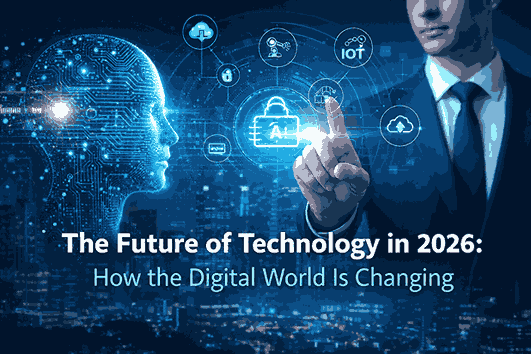
The Future of Technology in 2026: A Complete Guide to the Digital World
The year 2026 represents one of the most important turning points in the history of technology. Over the past few decades, digital tools have changed the way people communicate, work, shop, learn, and live. However, in 2026, this transformation has reached an entirely new level. Technology is no longer just supporting human activities – it is shaping the very structure of modern society.
From artificial intelligence and cloud computing to cybersecurity and automation, almost every part of life is now connected to digital systems. Even small tasks like booking an appointment, paying a bill, or learning a new skill depend on technology. In this article, we explore the most important technology trends of 2026 in simple language so anyone can understand how the world is changing.
1. Artificial Intelligence Is Now a Daily Companion
Artificial Intelligence, commonly called AI, has become one of the most powerful forces in 2026. AI is no longer limited to research laboratories or large companies. It is now used by students, teachers, doctors, shop owners, and even in households.
People use AI to write emails, create designs, edit videos, translate languages, analyze data, and solve problems. Many smartphones and computers now include AI assistants that can understand human voice and respond naturally.
In healthcare, AI systems help doctors detect diseases early by analyzing scans and medical data. In education, AI tutors guide students through lessons based on their learning speed. In businesses, AI predicts customer needs and improves planning.
2. Websites Have Become Smart Digital Platforms
Websites in 2026 are not just pages of information. They are intelligent systems that interact with visitors. Modern websites include chatbots, online booking, secure payments, live support, and personalized content.
When a user visits a website today, the site understands their needs and shows relevant information. Search engines also prefer websites that load fast, are mobile-friendly, and provide helpful content.
3. Cloud Computing Powers the Digital Economy
Cloud computing allows people to store data and run software on the internet instead of physical computers. In 2026, almost all digital services use the cloud.
People store photos, documents, and videos in cloud storage. Businesses run accounting, customer management, and operations on cloud platforms. This makes work flexible, secure, and scalable.
4. Automation Is Changing How Work Is Done
Automation is the use of software and machines to perform tasks automatically. In 2026, automation is used in offices, factories, hospitals, and online services.
Emails, customer support, billing, scheduling, and many other tasks are handled by automated systems. This saves time, reduces mistakes, and increases productivity.
5. Cybersecurity Is More Important Than Ever
With more data online, digital security is a major concern. Cybersecurity protects personal and business information from hackers.
Encryption, firewalls, biometric security, and AI-powered threat detection are used to keep systems safe.
6. Mobile Technology Dominates Daily Life
Smartphones in 2026 are powerful enough to handle almost every task. People use mobile devices for work, shopping, education, and entertainment.
Mobile apps have replaced many traditional services.
7. Internet of Things (IoT) Creates Smart Environments
IoT connects everyday objects to the internet. Smart homes, fitness trackers, connected cars, and digital meters are common in 2026.
8. Digital Payments Replace Cash
Online payments, QR codes, and digital wallets have made cashless transactions normal.
9. Online Education and Remote Work
Virtual classrooms and remote jobs allow people to learn and work from anywhere in the world.
10. Data Is the New Power
Data analytics helps organizations make better decisions, improve services, and predict trends.
Conclusion
Technology in 2026 is shaping a smarter, faster, and more connected world. Understanding these trends helps people prepare for the future.
Frequently Asked Questions (FAQs)
What are the biggest technology trends in 2026?
Artificial intelligence, cloud computing, automation, cybersecurity, mobile technology, IoT, and data analytics are the biggest trends.
How is AI used in daily life?
AI is used for writing, customer support, healthcare, education, and decision making.
Why is cloud computing important?
It allows people to store data and access software from anywhere securely.
What is automation?
Automation uses software to perform tasks without human involvement.
How does cybersecurity protect users?
It protects data using encryption, firewalls, and security systems.
Why is mobile technology important?
Mobile devices allow people to access digital services anytime.
What is IoT?
IoT means everyday devices connected to the internet.
How do digital payments work?
They allow secure online money transfers.
Why is online learning popular?
It allows people to study from anywhere.
Why is data valuable?
Data helps organizations make better decisions.